Best Answering Service for Electricians: Capture Emergency Calls 24/7
Sparking outlets and dead panels can't wait for a callback. See how the best answering service for electricians triages emergencies, what it costs, and how to pick one.

A sparking outlet is a fire risk, not a "we'll call you back" situation. Electrical distribution and lighting equipment cause an average of 30,740 home fires a year (NFPA). Meanwhile, roughly a quarter of calls into home services businesses never get answered at all, per Invoca's review of more than 60 million calls (Invoca, 2025). Whoever picks up first usually wins the job, and the best answering service for electricians is built to make sure that's you.
Key Takeaways
- In 2025, Invoca found 27% of home services calls go unanswered, roughly 1 in 4 sparking-outlet callers hearing a ring, then nothing (Invoca, 2025).
- Hiring an electrician runs $163–$536, with most jobs around $348, and after-hours emergencies add $100–$200 or push the rate to 1.5–2× standard (Angi, 2026).
- Electrical failures aren't routine calls: distribution and lighting equipment caused an average of 30,740 home fires a year from 2016–2020 (NFPA).
- Published AI answering pricing runs $49–$299/month flat-rate (Rosie, GoodCall), versus a $17.90/hour median for a live receptionist (BLS, May 2024).
- Trade-specific triage, FSM integration, and published pricing separate a real electrician answering service from a generic call center.
What Is an Electrician Answering Service?
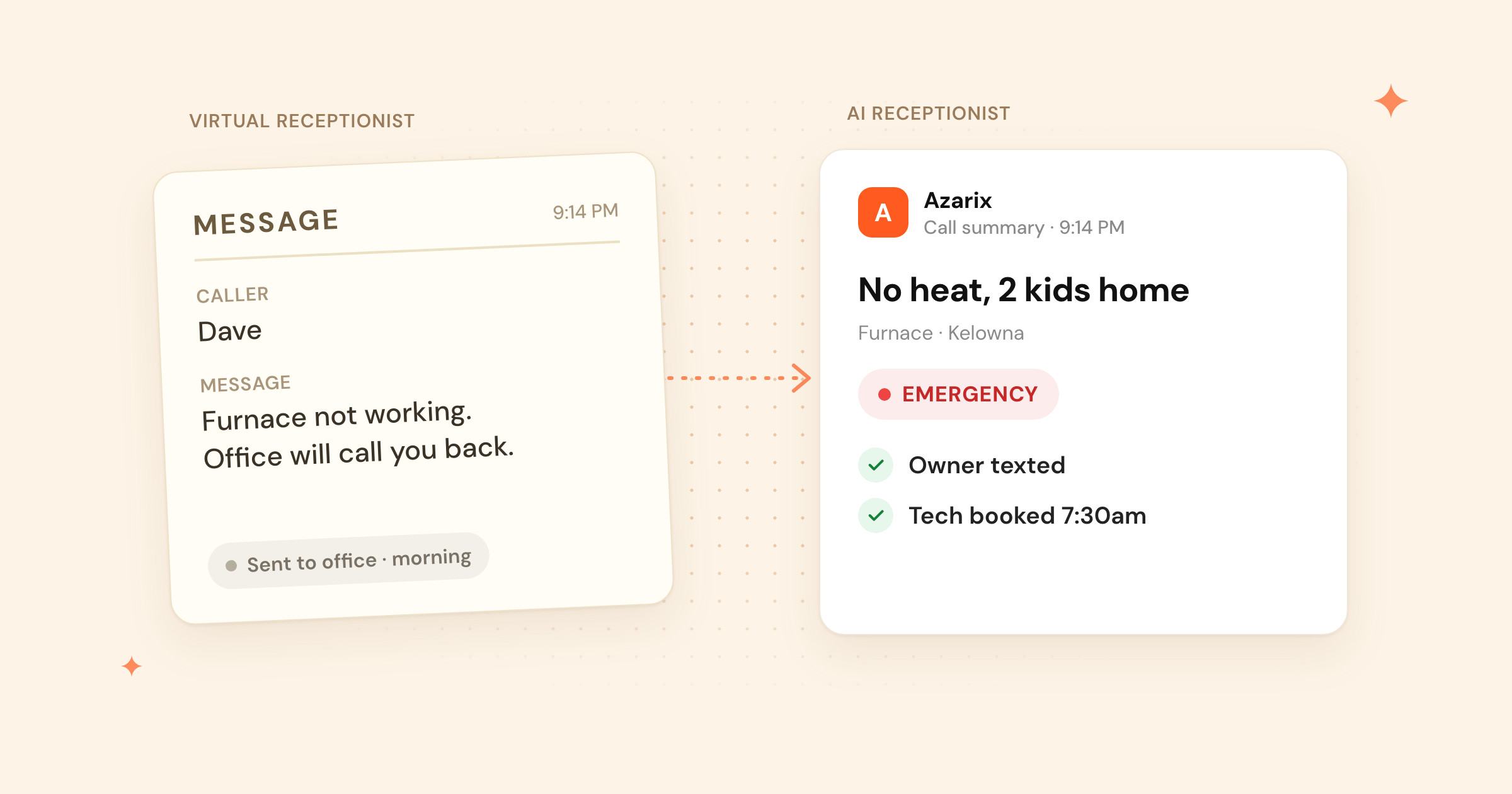
An electrician answering service is a 24/7 front line for an electrical business: it picks up every call, logs what's happening, and routes anything urgent straight to a technician instead of letting it die in voicemail overnight. Coverage can be live agents, an AI system, or some blend of the two.
What separates a good one from a phone-tree isn't the fact that someone (or something) answers. Generic call centers treat every caller the same. A shop that actually understands electrical work asks pointed questions first: is there smoke or a burning smell, does the breaker keep tripping, is the panel hot to the touch. The answers determine whether the job gets dispatched tonight or scheduled for tomorrow's route.
Compare that to a receptionist fielding calls for a law firm or a dental office. Same phone skill, entirely different stakes.

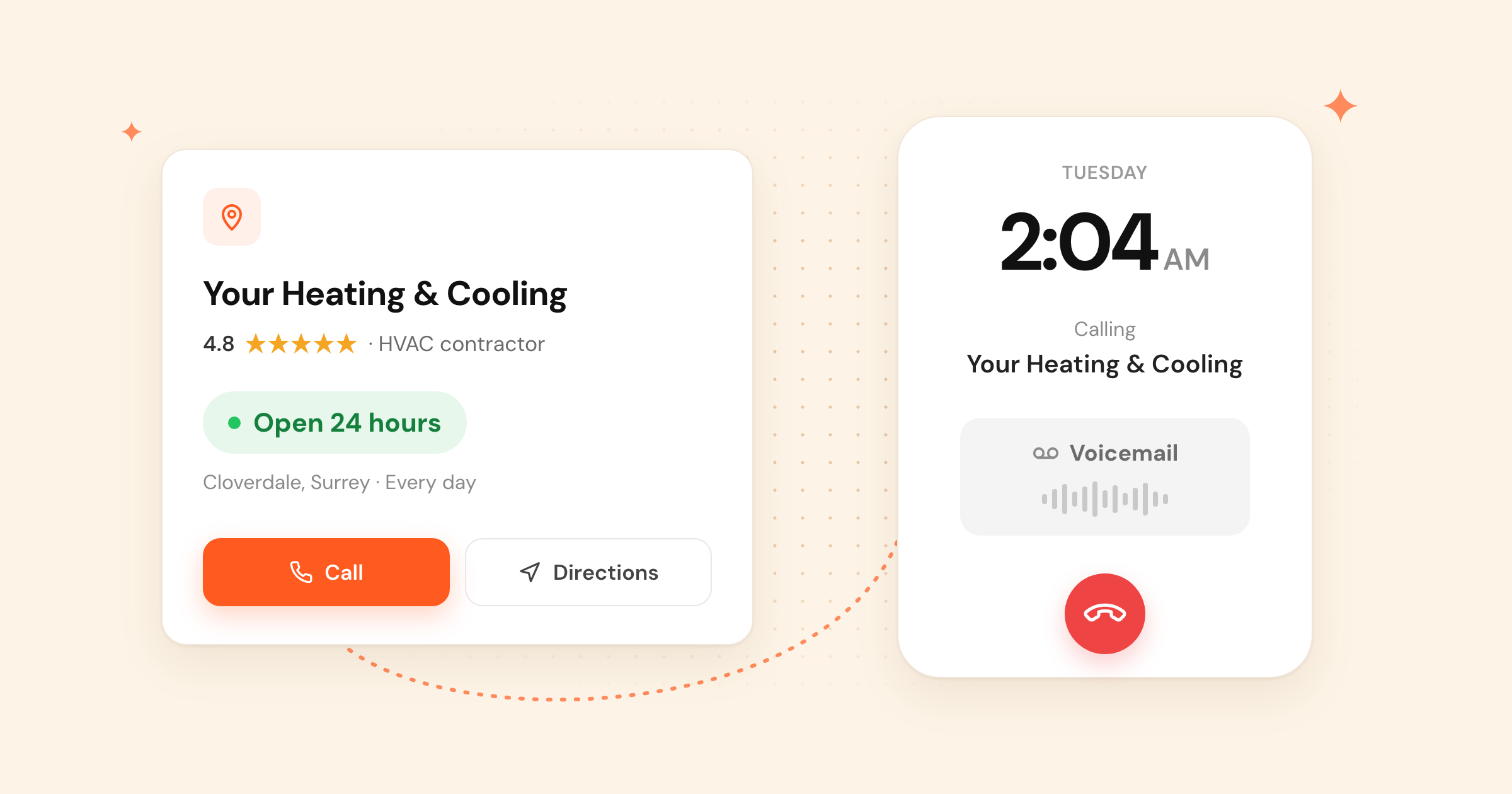
Some owners assume voicemail already covers this. It doesn't, not in any way that counts. A recorded greeting can't triage a caller, can't dispatch a truck, and can't stop someone from hanging up mid-message to try the next electrician on Google. For the full breakdown, see what missed calls actually cost trade businesses.
Why Missed Calls Cost Electrical Contractors Real Money
Invoca's 2025 review of home services call data found 27% of calls simply go unanswered, and callers who hit that dead end rarely bother leaving a voicemail (Invoca, 2025). For an electrical contractor, that missed 27% skews heavily toward emergencies, since those calls come in nights and weekends when staffing is at its thinnest.
Put a number on it. Angi's 2026 data shows most electrical jobs land around $348, built from a $100–$200 first-hour service fee plus labor, and after-hours emergency work tacks on another $100–$200 or jumps to 1.5–2× the standard rate (Angi, 2026). Miss a sparking-outlet call at 9 p.m. and you're not out $348. You're out the emergency-rate version of that job, which tends to be the best-margin work on the books.
A quieter cost sits behind the scenes. Google's own documentation for Local Services Ads lists "responsiveness to customer inquiries and requests" as a factor in how a business ranks (Google Local Services Ads Help). Miss enough calls, and it's not just this week's job at risk, it's how many leads show up next month.
How Does an Electrician Answering Service Handle a Sparking-Outlet Call?
Speed is the entire job here. A properly built electrician answering service answers on the first ring, walks the caller through a short safety-triage script, and either alerts the on-call tech or books the next open slot, usually inside 60–90 seconds. Someone staring at a scorched outlet doesn't want a promise of a callback; they want to know a truck is already moving.
Here's roughly how that call plays out:
- The line picks up immediately, day or night, with zero ring-to-voicemail lag.
- A triage script kicks in fast: smoke or burning smell, a breaker that won't stay reset, a panel that's warm, whether power's been cut safely.
- Anything urgent gets pushed to the on-call electrician through a text or app alert; everything else lands on the regular schedule.
- The caller hears back with a confirmation, and the office gets a synced summary inside whatever platform runs the business.
Why lean this hard on triage? Because a homeowner genuinely can't judge how dangerous an electrical fault is. NFPA data from 2016 to 2020 puts electrical distribution and lighting equipment behind an average of 30,740 home fires a year, 390 deaths, and $1.4 billion in property loss annually (NFPA). "My outlet's sparking and I smell burning" is exactly the call that can't sit in a mailbox.
What Happens After Hours vs. During Business Hours
During the day, an electrician answering service mostly catches overflow, the calls a busy front desk can't get to in time. Once the office closes, that role flips completely: the service becomes the only phone system the business has, with nobody in-house to hand a call to.
For a look at how the same after-hours gap plays out for a different trade, see how a plumbing shop handles the same after-hours emergency gap.
Live Receptionist vs. AI Answering Service vs. Voicemail: Which Wins More Jobs?
Voicemail simply forfeits the emergency call; a homeowner with a hot panel isn't going to sit on hold for a callback. A live receptionist brings a human touch, but full-time coverage runs against a $17.90/hour median wage for the role (U.S. Bureau of Labor Statistics, May 2024). An AI answering service splits the difference: instant pickup, a fraction of the cost, and no shift changes to plan around.
Here's how the three options actually stack up, not as a sales pitch but as a plain tradeoff:
| Voicemail | Live Receptionist | AI Answering Service | |
|---|---|---|---|
| Response time | None — caller leaves a message or hangs up | Fast during shifts | Instant, 24/7 |
| Cost | "Free," but the hidden cost is every lost job | ~$17.90/hr median wage, before overtime and benefits | $49–$299/month flat-rate (published vendor examples) |
| Coverage | Whenever no one picks up | Limited to staffed hours | 24/7/365, no sick days or holidays |
| Consistency | None | Depends on staffing and training | Same triage script, every call |
For a sense of scale, Rosie's tiered rate card runs $49–$299 a month by minutes included, while GoodCall's per-agent plans run $79–$249 a month with unlimited minutes (Rosie; GoodCall). Both post real numbers on the page, not a lead-gen form disguised as a pricing page.

Ask an electrical contractor how they think about this and "AI versus human" rarely comes up. The real question sounds more like: who's answering at 10 p.m. when the owner is mid-panel-upgrade and the part-timer went home at five? That's the tradeoff worth solving for.
What Should You Look for in an Electrician Answering Service?
Picking up the phone is table stakes; the real differentiators are trade-specific triage logic, a live sync with your job platform, and a rate card you can read before you talk to sales. ServiceTitan alone counts more than 100,000 service professionals across HVAC, plumbing, and electrical (ServiceTitan), and Jobber counts over 400,000 (Jobber). Skip the integration piece and you've built yourself a new manual data-entry step, right when speed matters most.
A few things worth confirming before you sign anything:
- Scripts written for electrical work specifically. A sparking outlet, a dead panel, and a flickering fixture each need a different set of triage questions.
- A real connection to Jobber, ServiceTitan, or Housecall Pro, one that pushes data automatically instead of leaving someone to retype it.
- Pricing posted in plain view, not gated behind a "schedule a call" button.
- Bilingual coverage, if that reflects the calls your service area actually generates.
Questions to Ask Before You Sign
- What's the contract term, and what does canceling actually involve?
- How does the service handle a sudden spike, say a regional outage or a heat-wave load surge?
- Do you get raw call recordings and transcripts, or only a summary?
- What does onboarding look like from signup to first live call?
How Much Does an Electrician Answering Service Cost?
Real numbers beat estimates: Rosie's plans run $49, $149, or $299 a month depending on minutes, and GoodCall's per-agent tiers run $79, $129, or $249 (Rosie; GoodCall, current). Weigh that against the job math, since a single recovered emergency call at roughly $348, before any after-hours surcharge, already covers a full month at the entry tier with room to spare.
Notice what neither rate card does: charge by the minute. Both are flat, tiered monthly plans, and that detail matters more than it looks. Per-minute or per-call billing hits hardest in the exact months an electrical shop takes the most emergency calls, think storm season or a cold snap, which is the opposite of what a buyer wants from a pricing model. Check for flat or tiered structure before you even look at the sticker price.
A live-staffed line runs closer to a receptionist's wage instead, a $17.90/hour U.S. median before overtime and benefits, and one person still can't cover nights, weekends, and holidays solo (BLS, May 2024). The math that matters for most owner-operated shops isn't which option is cheaper hour for hour. It's which one guarantees the 10 p.m. sparking-outlet call actually gets picked up.
Frequently Asked Questions
What is an electrician answering service?
It's a 24/7 call-handling system built for electrical businesses: it answers every call, gathers the job details, and routes urgent ones to the right technician. Coverage can be live, AI-driven, or hybrid, but the scripting is built around electrical emergencies specifically, not generic customer service.
How does an answering service handle emergencies like a sparking outlet?
The call gets picked up right away, runs through a brief safety-triage script (smoke, burning smell, a breaker that keeps tripping), and dispatches the on-call electrician by text or app alert, typically within 60–90 seconds. Anything non-urgent goes onto the regular calendar instead of interrupting dispatch.
Is AI good enough to handle electrical emergency calls?
Modern AI answering platforms handle real-time triage and dispatch for electrical work, with vendors like Rosie and GoodCall publishing flat rates of $49–$299 a month (Rosie; GoodCall). Calls that are ambiguous or clearly safety-critical typically get handed off to a live person.
How much does an answering service for electricians cost?
Published AI answering pricing sits at $49–$299 a month flat-rate on current vendor rate cards (Rosie; GoodCall). Given that the typical electrical job runs about $348 (Angi, 2026), one recovered emergency call generally pays for a month of service.
Does an electrician answering service integrate with Jobber, ServiceTitan, or Housecall Pro?
It should, directly, without manual re-entry. ServiceTitan alone serves more than 100,000 service professionals (ServiceTitan), so an answering service that can't push a call summary into that system straight away is creating extra work during the worst possible moment.
The Bottom Line
Every unanswered emergency call is a real dollar amount walking out the door, typically around $348 and often higher once the after-hours rate kicks in, landing with whichever electrician answered the phone first. Electrical work carries a fire risk that most callers can't gauge for themselves, which is precisely why a sparking-outlet call is the worst possible one to leave sitting in voicemail. An understaffed line has the same effect as no line at all. Closing that gap takes trade-specific triage, a real connection to your job platform, and pricing you don't have to ask for.
If you're comparing options for the best answering service for electricians, start with one that shows its pricing up front and can walk you through exactly how it handles a sparking-outlet call before you commit to anything. See how Azarix handles emergency electrical calls: book a demo.
About the author: James Smith is the founder of Azarix, an AI answering service built for trades businesses.
Sources
- Invoca, "See How Much Missed Sales Calls Cost Home Services Businesses," retrieved 2026-07-20, https://www.invoca.com/blog/how-much-missed-sales-calls-cost-home-services-businesses
- Angi, "How Much Does an Electrician Cost to Hire? [2026 Data]," retrieved 2026-07-20, https://www.angi.com/articles/how-much-does-it-cost-hire-electrician.htm
- NFPA, "Home Fires Caused by Electrical Failure or Malfunction" (2016–2020 averages), retrieved 2026-07-20, https://www.nfpa.org/education-and-research/research/nfpa-research/fire-statistical-reports/home-fires-caused-by-electrical-failure-or-malfunction
- Google Local Services Ads Help, "About ad rankings," retrieved 2026-07-20, https://support.google.com/localservices/answer/7527305?hl=en
- U.S. Bureau of Labor Statistics, Occupational Outlook Handbook — Receptionists, May 2024, https://www.bls.gov/ooh/office-and-administrative-support/receptionists.htm
- ServiceTitan, Press page, retrieved 2026-07-20, https://www.servicetitan.com/press
- Jobber, About page, retrieved 2026-07-20, https://www.getjobber.com/about/
- Rosie, Pricing page, retrieved 2026-07-20, https://www.heyrosie.com/pricing
- GoodCall, Pricing page, retrieved 2026-07-20, https://www.goodcall.com/pricing